
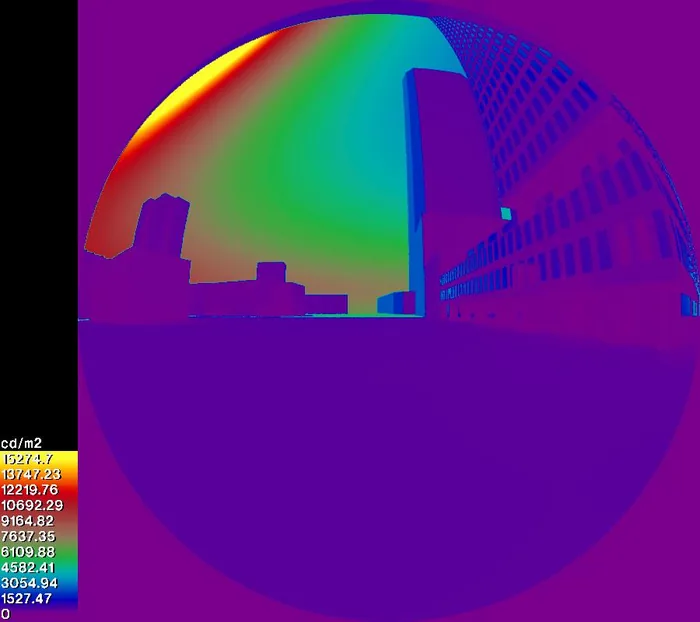
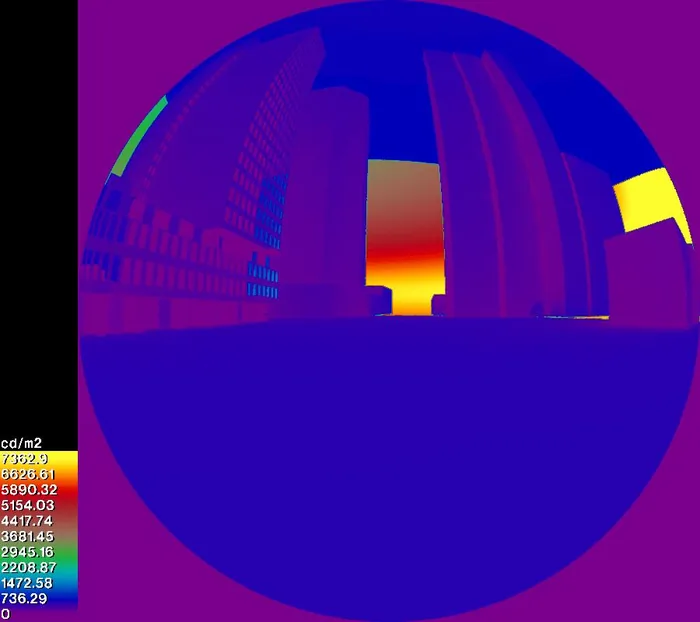
View 1, northbound driver
Afternoon, 2–3 pm, clear sky
- Veiling luminance
- 906 cd/m² limit 500
- Adaptation luminance
- 13,855 cd/m²
- Threshold increment
- 28.6% limit 15%
Above both limits. Flagged for further review and mitigation at this approach.
/ Solar reflectivity and glare
570 George Street, Sydney. A solar reflectivity and glare assessment of the western façade facing the light rail corridor, following the Hassall (1991) method.
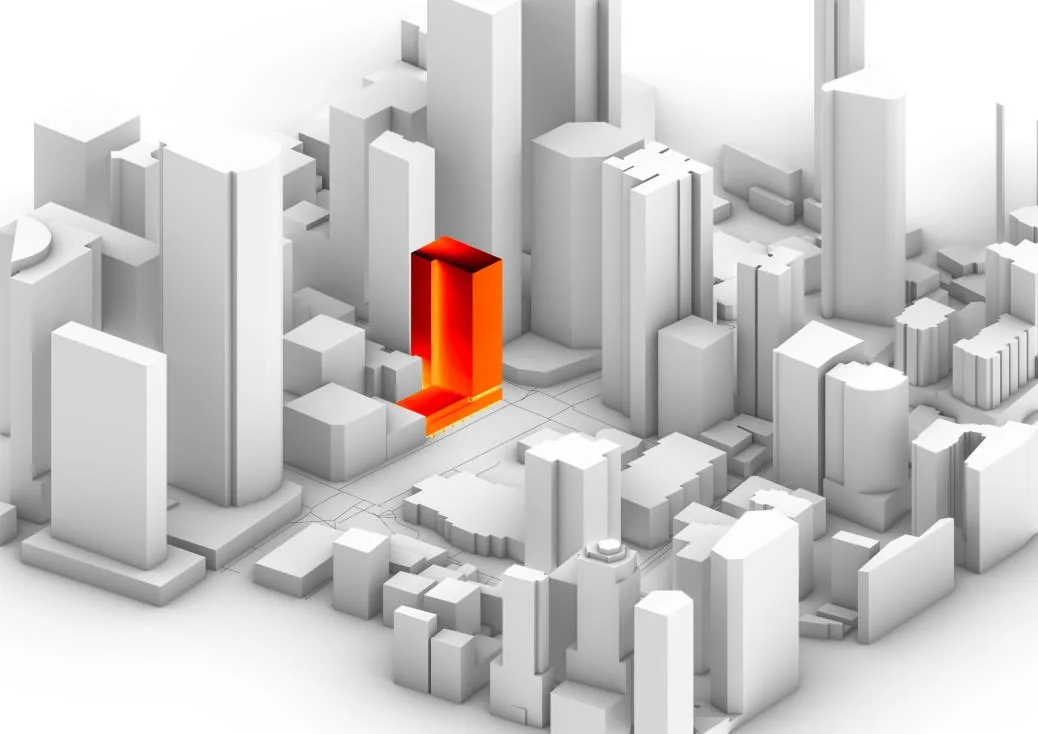
Light rail runs along George Street directly beside the building’s western façade. Sunlight reflected from glazing or metal cladding can reach a driver’s eye and reduce their ability to see the track and signals. This study tested the proposed façade against the Sydney glare criteria from two driver positions.
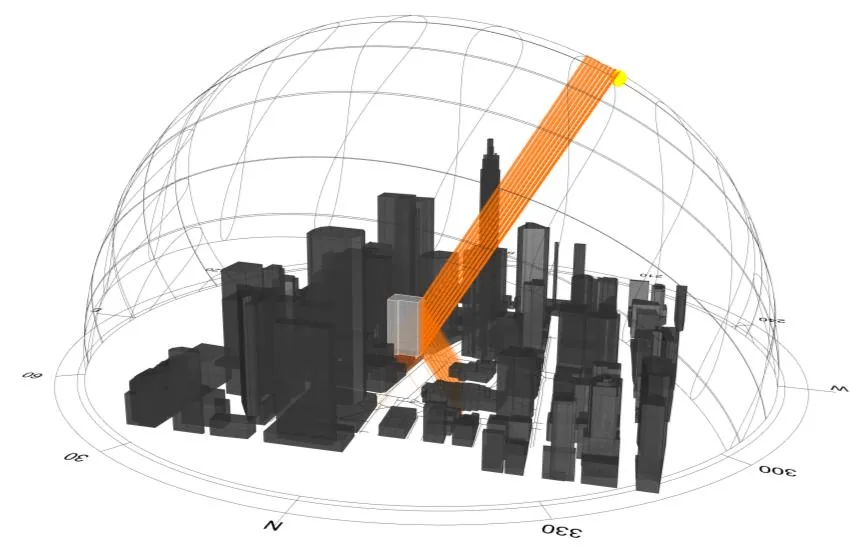
Sydney receives high annual solar exposure, and the SRC-TMYx data for Observatory Hill shows direct radiation arriving mostly from the north-west and west in the afternoon. That is when the western façade is most likely to reflect sun into the corridor, so the assessment focused on clear-sky afternoon conditions at the solstice and equinoxes.
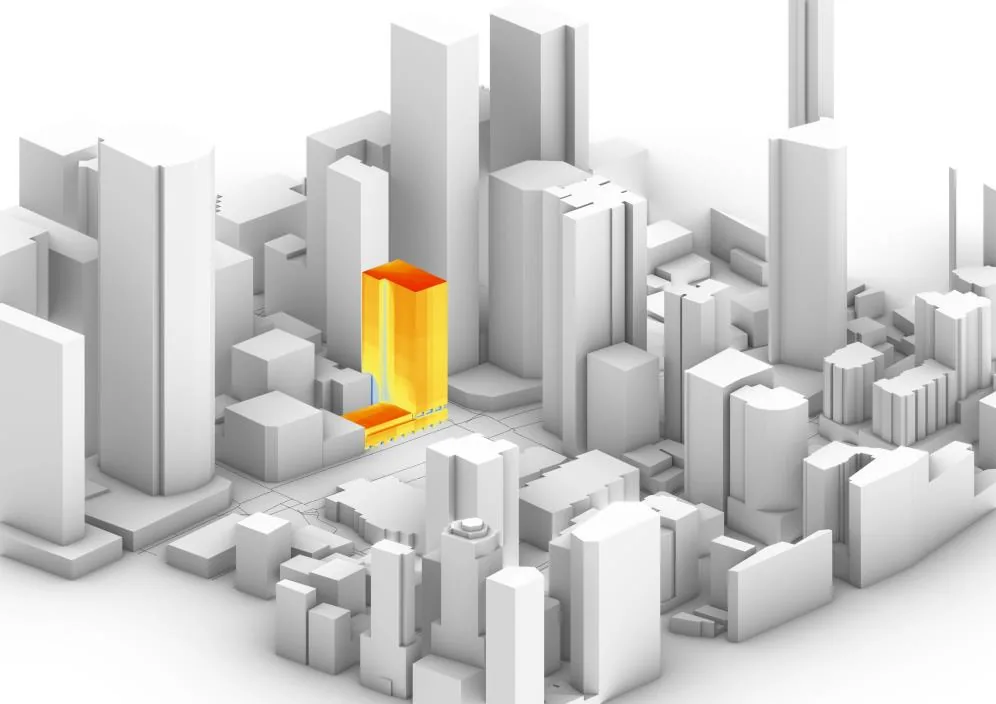
The upper and westernmost zones receive the most sun. These are the surfaces tested as potential glare sources in the driver views.
External visible reflectivity from manufacturer data, checked against the Transport for NSW limit. Where product data was missing, conservative values based on AS/NZS 1580.602.2 were used.
0%TfNSW limit 15%20%
All five material groups comply. Signage is limited to the building’s existing dark bronze anodised finish or matt materials, with no illuminated, mirrored or high-gloss elements.
Threshold increment (TI) is calculated with the Hassall / CIE relationship TI = 65 × Lv / Lad0.8, from the veiling luminance (Lv) and adaptation luminance (Lad) at each driver position.
Afternoon, 2–3 pm, clear sky
Above both limits. Flagged for further review and mitigation at this approach.
Afternoon, 2–4 pm, clear sky
Within both limits.
Every façade material visible from the light rail corridor sits below the TfNSW 15% reflectivity limit, and the southbound driver view meets both glare criteria. The northbound view exceeds the veiling luminance and threshold increment limits in the early afternoon, so that approach is the one to address, through façade detailing or further analysis, before the design is finalised.
The study shows why glare is worth testing from the driver’s actual position: a compliant material schedule alone does not guarantee a compliant view.
Tell me about your team, your project or your course, and I'll point you to the right one.