
Not every energy-efficient building needs an energy model. And not every project that uses an energy model is following the same compliance logic.
One of the first decisions in an ASHRAE 90.1 project is choosing how compliance will be demonstrated. For new buildings under ASHRAE 90.1-2016, three alternative routes are available: the Prescriptive Path through Sections 5–10, the Energy Cost Budget Method in Section 11, and the Performance Rating Method in Normative Appendix G. They are different routes within the same technical framework — not three separate standards.
The important part is confirming the governing edition, the authority and the compliance path before detailed modelling begins.
Three Paths, Three Questions
Each compliance path essentially asks a different question:
- Prescriptive: does each component meet its applicable requirement?
- Section 11: is the design energy cost within the energy cost budget?
- Appendix G: is the Performance Cost Index within its project-specific target?
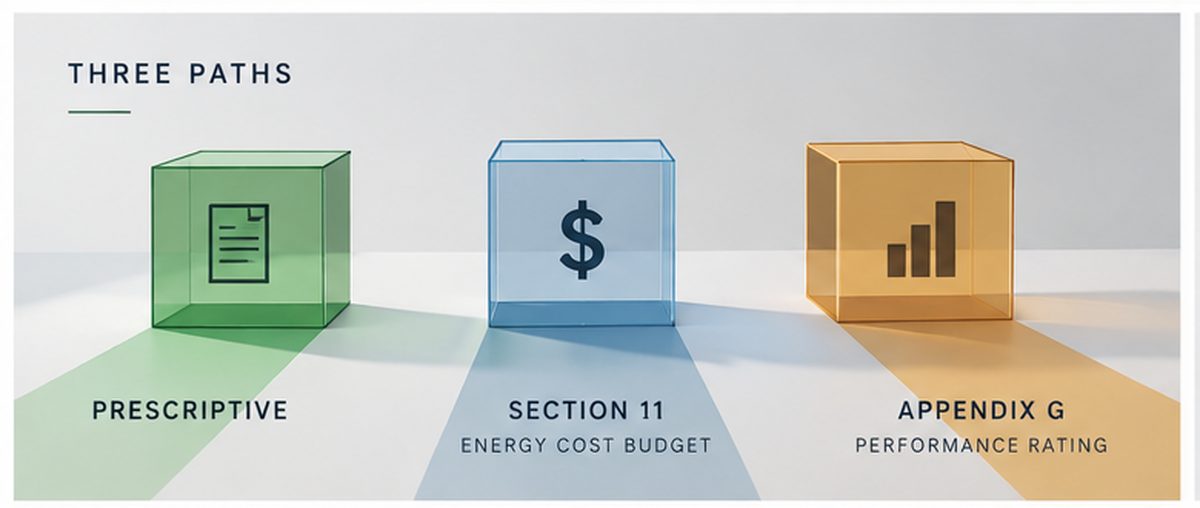
The simulation engine may be the same, but the comparison model, the calculations, the assumptions and the documentation can be very different. That is why choosing a path after the model has already been built can create unnecessary rework.
Path 1: The Prescriptive Route
The Prescriptive Path is the most direct component-by-component compliance approach. Instead of evaluating the building primarily through whole-building performance, the project demonstrates compliance by satisfying the applicable technical requirements across areas such as the envelope, HVAC, lighting, service water heating, power and other equipment.
Whole-building simulation is generally not required for this route, which makes it particularly useful when:
- the design is relatively conventional,
- the applicable requirements can be met directly, and
- there is no need for quantified whole-building trade-offs.
Check → Meet → Document
But that simplicity comes with a limitation. A prescriptive approach offers limited whole-building flexibility: stronger performance in one system does not generally erase a shortfall in an unrelated requirement, unless the applicable technical section explicitly permits that trade-off.
Path 2: The Energy Cost Budget Method
The Energy Cost Budget Method (ECBM) is a whole-building performance path used for code compliance in the 2016 framework. Instead of checking every design decision independently, the Proposed Building Design is compared against a Budget Building Design.
Design Energy Cost ≤ Energy Cost Budget
This allows regulated whole-building trade-offs where Section 11 permits them, while keeping the comparison controlled through path-specific rules and shared assumptions.
That flexibility does not mean anything goes. Mandatory requirements still apply, the Budget Building Design follows its own Section 11 rules, and the same approved utility-rate basis is applied consistently to both models.
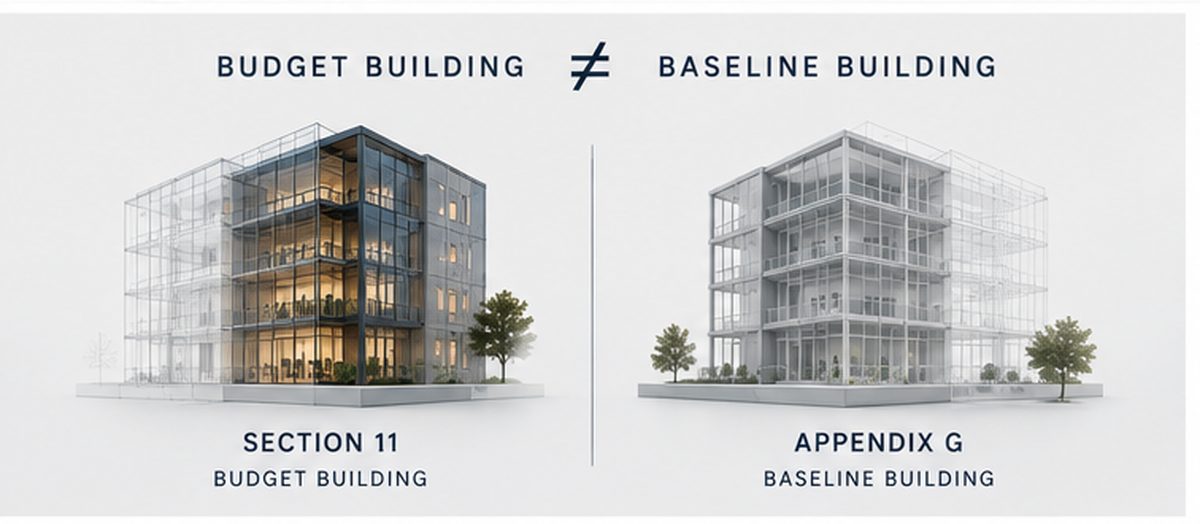
One important detail is often overlooked: the Budget Building is not the Baseline Building. The Budget Building Design is the comparison model for Section 11 and depends on the proposed design. The Appendix G Baseline Building Design follows a different logic and is intended to provide a more standardised reference.
Path 3: Appendix G Performance Rating Method
Appendix G uses a different performance-comparison framework. The Performance Rating Method (PRM) compares the Proposed Building Design against a defined Baseline Building Design.
That baseline is not simply a less-efficient copy of the project. It is a standardised, substantially independent reference generated from Appendix G rules for envelope, HVAC, lighting, service water heating, controls and other model inputs.
PCI ≤ PCIt
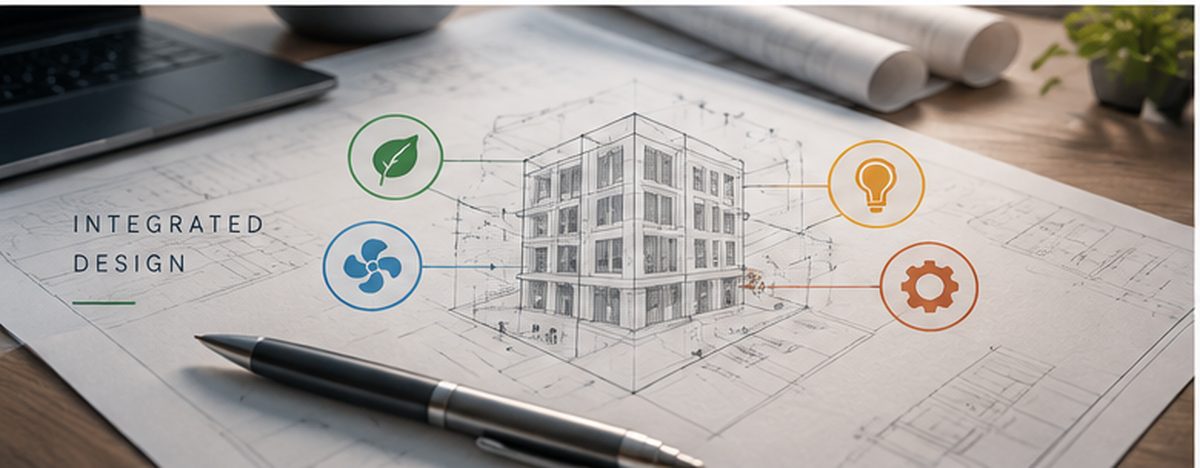
Because the baseline is rule-based and standardised, Appendix G can recognise integrated design strategies within the PRM rules, and it is also used by selected rating and incentive programs. A project may combine:
- a more efficient HVAC system,
- improved envelope performance,
- better lighting controls,
- optimised glazing, and
- other energy-efficiency strategies.
Instead of asking whether each improvement independently meets a fixed requirement, the performance method evaluates their combined effect on the building. That is the fundamental shift:
- Prescriptive — component-by-component compliance
- Performance — whole-building performance within defined rules
Mandatory Does Not Mean Optional
One of the most common misconceptions about performance paths is that once a project uses whole-building simulation, mandatory requirements can be ignored.
They cannot. Mandatory provisions remain applicable under all three routes. Depending on the project, these can include envelope air-leakage and assembly requirements, minimum equipment efficiencies, HVAC controls, service water-heating provisions, electrical requirements and lighting controls.
So performance modelling does not mean:
If the building performs well enough, anything else is acceptable.
It means:
Meet the mandatory requirements, then demonstrate the required level of overall performance through the selected method.
So Which Path Should You Choose?
There is no universally best compliance path. The choice depends on the project, the governing requirements, and what the project needs to demonstrate.
- Choose Prescriptive when the design is conventional, all applicable requirements can be met directly, and quantified whole-building performance is not required.
- Choose Section 11 when the adopted code permits the Energy Cost Budget Method and the project needs regulated whole-building trade-offs for code compliance.
- Choose Appendix G when the authority having jurisdiction accepts the 2016 Performance Rating Method, or when a rating or incentive program specifically requires it.
Sometimes a project has more than one obligation. A building may need to satisfy an energy code and a certification or incentive program. In that case the project team should not assume that one model automatically satisfies every requirement: program-specific rules, versions, referenced ASHRAE editions and documentation requirements need to be checked separately.
The Decision Comes Before the Simulation
This may be the most important lesson. The compliance path is not a reporting detail — it is a modelling decision. The selected path determines which comparison model is required, which calculations need to be performed, how the results are evaluated, and what documentation must be submitted.
Starting a model before answering these questions can mean rebuilding parts of it later. A better workflow is:
Project requirements → applicable edition → authority or program → compliance path → modelling rules → simulation → compliance result
The model comes after the logic, not before it.
Common Misconceptions
- “A performance path is automatically easier than prescriptive.”
- Not necessarily. Performance paths provide flexibility, but they also require two defensible models, path-specific rules, controlled assumptions, quality checks and more documentation.
- “Appendix G is only for LEED.”
- Not in the 2016 framework. Appendix G is an explicit Standard 90.1 compliance path, and it is also used separately by rating programs.
- “Any PCI below 1.0 means compliance.”
- No. For Standard 90.1-2016 compliance, PCI must be no greater than the project-specific PCIt.
- “Section 11 and Appendix G use the same baseline.”
- No. Section 11 uses a dependent Budget Building Design; Appendix G uses a standardised Baseline Building Design, with different rules and purposes.
- “Performance modelling replaces mandatory requirements.”
- No. Mandatory provisions remain applicable.
The Real Insight
The most important difference between prescriptive and performance compliance is not whether a simulation program is used. It is where the flexibility exists.
The Prescriptive Path gives you a defined set of requirements to satisfy. Performance methods allow controlled whole-building trade-offs, but only within the selected method's rules, with a carefully controlled comparison and documentation process.
That is why choosing a compliance path is a project-strategy decision as much as a modelling decision. Before asking “how should we model the building?”, ask:
What exactly are we trying to prove?